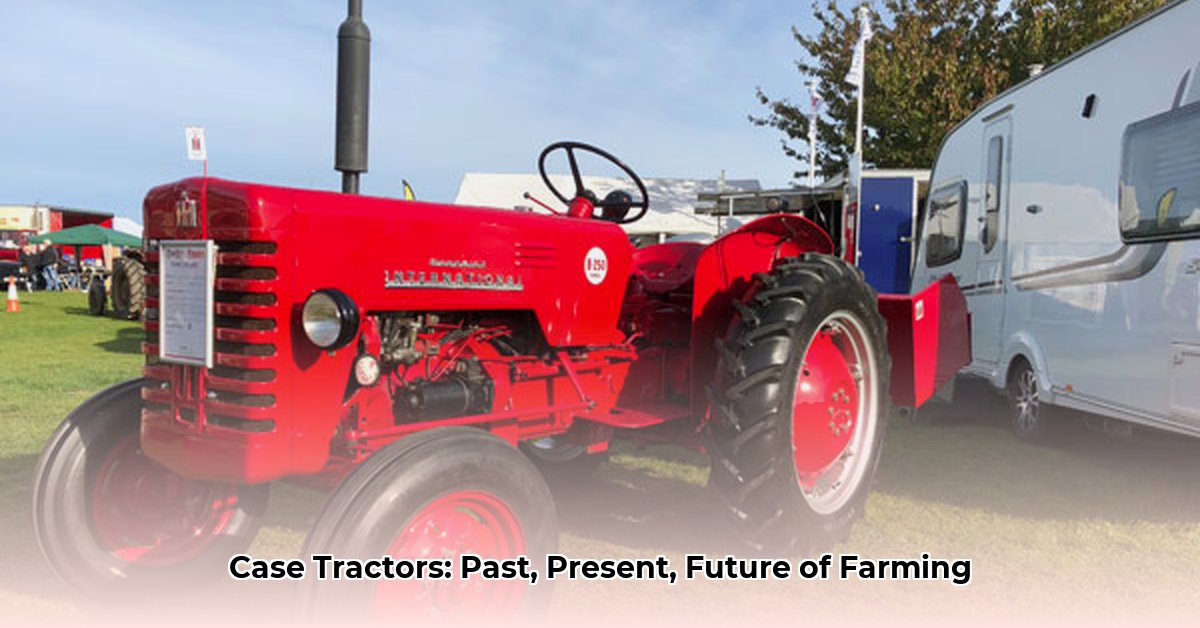
Case Tractors: A Legacy Forged in Innovation and Sustainability
Case tractors' history is a compelling narrative of agricultural innovation and the ongoing pursuit of sustainable farming practices. From their origins in steam-powered threshing machines to today's technologically advanced precision farming equipment, Case's journey mirrors the evolution of agriculture itself. This journey wasn't solely about creating bigger and more powerful machines; it was about continuously increasing efficiency, reducing waste, and ultimately, forging a more sustainable path for food production. How did Case achieve this? Let's explore their remarkable story. For more on popular tractor brands, check out this helpful resource: Popular Tractor Brands.
From Steam Power to Gasoline: Revolutionizing Harvesting
Case's story begins not with tractors, but with steam-powered threshing machines. These early innovations revolutionized harvesting, drastically reducing the time and labor needed to separate grain from stalks. Instead of weeks of backbreaking work, farmers could now complete the task in days—a monumental leap in productivity. This early success established Case's reputation for efficiency and innovation, laying the groundwork for their future dominance in the agricultural machinery sector. This wasn't merely about technological advancement; it fundamentally altered the way farmers worked and the scale at which they could operate.
The Internal Combustion Engine: A New Era of Power and Efficiency
The advent of the internal combustion engine marked a pivotal moment for Case. The company quickly transitioned from steam power to gasoline-powered tractors, building rugged, reliable machines designed to withstand the harsh realities of farm life. These early tractors were far from sleek; they were powerful workhorses built for durability and performance. The transition was marked by fierce competition, pushing Case to continuously innovate and improve their designs. Each new model represented a significant step forward, incorporating advancements in engine power, fuel efficiency, and ease of operation. This period of intense competition pushed both the boundaries of engineering and the efficiency of farm operations. Did this early success come without a cost? Let's consider the environmental implications.
Early Successes and Unintended Consequences: The Environmental Paradox
While Case's early tractors dramatically increased agricultural productivity, they also introduced a new set of challenges. The reliance on fossil fuels introduced significant environmental concerns. This presents a complex paradox: how do we balance the tremendous advancements in food production with the environmental impact of the technologies that drove them? This question is central to understanding Case's complete legacy, offering a valuable case study in the evolving relationship between technological progress and environmental responsibility. It highlights the need for constant innovation to mitigate these earlier impacts.
The Modern Era: Precision Farming and Sustainable Strides
The merger with International Harvester, forming Case IH, marked another significant turning point. This collaboration expanded Case's resources and global reach, accelerating development in sustainable technologies. Precision farming, leveraging GPS-guided tractors, sensors monitoring soil conditions, and data-driven decision-making, became central to their strategy. This technology allows farmers to optimize resource use with pinpoint accuracy, minimizing waste, reducing fuel consumption, and significantly lessening the environmental footprint of agriculture. Does this approach offer a solution to the earlier environmental concerns?
The Future of Sustainable Agriculture: Case IH's Ongoing Commitment
Case IH's future hinges on its continued commitment to sustainability. This requires a multi-faceted approach:
- Investing in Research and Development: Developing fuel-efficient and sustainable machinery, including electric tractors and alternative fuel technologies.
- Sustainable Manufacturing Practices: Optimizing manufacturing processes to minimize emissions and waste during production.
- Strategic Collaboration: Working closely with farmers, researchers, and governments to promote environmentally responsible practices and technology adoption.
The Case story is far more than just a history of tractor manufacturing; it's a reflection of our evolving relationship with the environment. The next chapter will be defined by a collective commitment to a sustainable future, creating technology that nourishes the planet as effectively as it provides for human needs.
Key Takeaways:
- Case IH's history showcases a continuous drive toward more efficient and sustainable farming practices.
- Technological innovations, particularly precision agriculture, significantly reduce waste and improve resource management.
- Challenges remain, particularly in terms of initial investment costs and the ongoing need for technological advancements.
- Successful sustainable agriculture demands collaboration among farmers, manufacturers, and policymakers.